Denver II Developmental Screening Framework
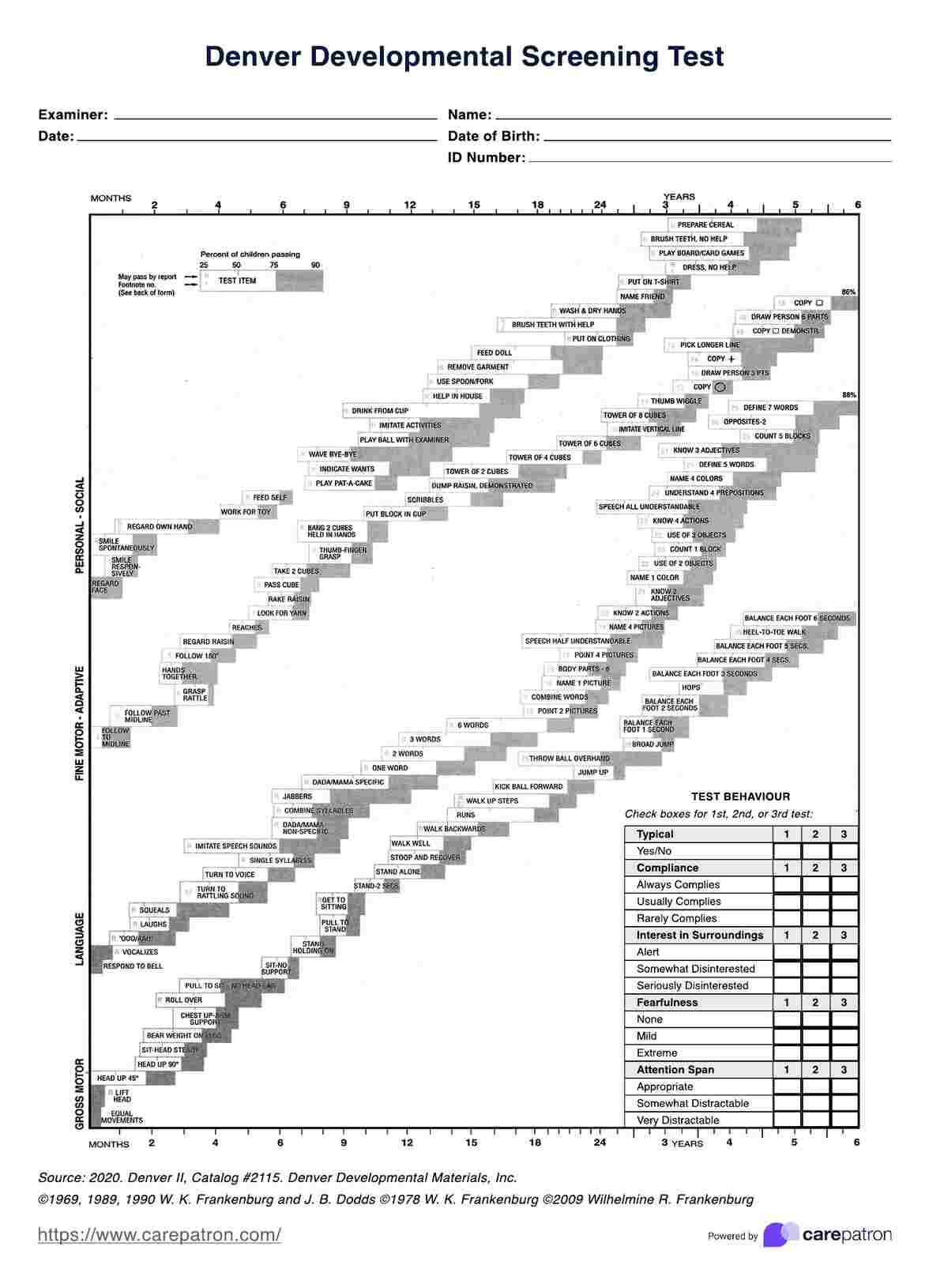
The Denver II is a structured developmental screening framework designed to support the early identification of potential delays in young children. It is widely utilized in clinical, educational, and pediatric contexts as an initial screening tool to evaluate developmental progress across key domains.
Rather than functioning as a diagnostic instrument, the Denver II serves as a screening mechanism. Its primary purpose is to highlight areas where a child’s development may require closer observation, further evaluation, or professional attention.
Purpose and Scope
The framework is intended to assess developmental functioning in children from birth through early childhood. It provides a standardized method for observing age-appropriate behaviors and comparing them to expected developmental milestones.
The goal is not to produce definitive conclusions, but to:
- Identify possible developmental concerns at an early stage
- Support clinical decision-making processes
- Guide referrals for more comprehensive assessment when needed
- Provide structured observational data for professionals
In this sense, the Denver II operates as a first-line screening system within a broader developmental evaluation process.
Core Developmental Domains
The screening framework is organized around four primary developmental domains:
Personal-Social
This domain focuses on a child’s ability to interact with others and engage in social environments. It includes behaviors such as self-awareness, responsiveness to caregivers, and participation in everyday social routines.
Fine Motor-Adaptive
This area evaluates hand-eye coordination, object manipulation, and problem-solving abilities. It reflects how a child interacts with their environment through controlled, precise movements.
Language
The language domain assesses both receptive and expressive communication skills. It includes the child’s ability to understand instructions, respond to verbal cues, and produce age-appropriate speech or sounds.
Gross Motor
This domain focuses on large muscle movements such as sitting, crawling, standing, and walking. It reflects physical coordination, balance, and overall motor development.
Standardized Screening Approach
The Denver II framework is based on structured observational items that are aligned with typical developmental timelines. Each item represents a behavior or skill that is expected to emerge within a certain age range.
During administration, the professional observes whether the child can perform specific tasks or behaviors. The results are then interpreted within a standardized format that allows for comparison against expected developmental patterns.
This structured approach ensures:
- Consistency across administrations
- Clarity in interpretation
- Objective documentation of developmental performance
Use in Professional Settings
The Denver II is commonly used in:
- Pediatric clinics
- Early childhood education centers
- Developmental follow-up programs
- Psychological and clinical assessment settings
It is particularly valuable in environments where early detection of developmental differences is critical. The framework allows professionals to quickly and systematically assess whether a child’s development aligns with expected norms.
Interpretation and Clinical Relevance
Results obtained from the screening process are interpreted in a structured manner. Outcomes may indicate that development is consistent with expectations, or that certain areas require monitoring or further evaluation.
It is important to emphasize that the Denver II does not provide a diagnosis. Instead, it functions as an indicator system that supports:
- Early identification of developmental risk
- Decision-making regarding referrals
- Ongoing developmental monitoring
When concerns are identified, more comprehensive and specialized assessment tools are typically recommended.
Professional Use and Considerations
The Denver II framework is intended for use by trained professionals who are familiar with developmental assessment principles. Proper administration requires:
- Understanding of developmental milestones
- Ability to observe and interpret child behavior accurately
- Familiarity with standardized screening procedures
The framework should be applied within an ethical and professional context, ensuring that results are interpreted appropriately and communicated responsibly.
Position Within Developmental Assessment
Within the broader landscape of developmental evaluation, the Denver II serves as a screening-level instrument. It is often used as an initial step before more detailed diagnostic assessments are conducted.
Its value lies in:
- Efficiency
- Structure
- Accessibility within professional settings
- Contribution to early intervention pathways
Conclusion
The Denver II remains a widely recognized framework for developmental screening in early childhood. By providing a structured and standardized approach, it supports professionals in identifying potential developmental concerns and guiding appropriate next steps.
As part of a comprehensive assessment process, it plays a critical role in promoting early awareness, informed clinical decisions, and timely intervention when necessary.